
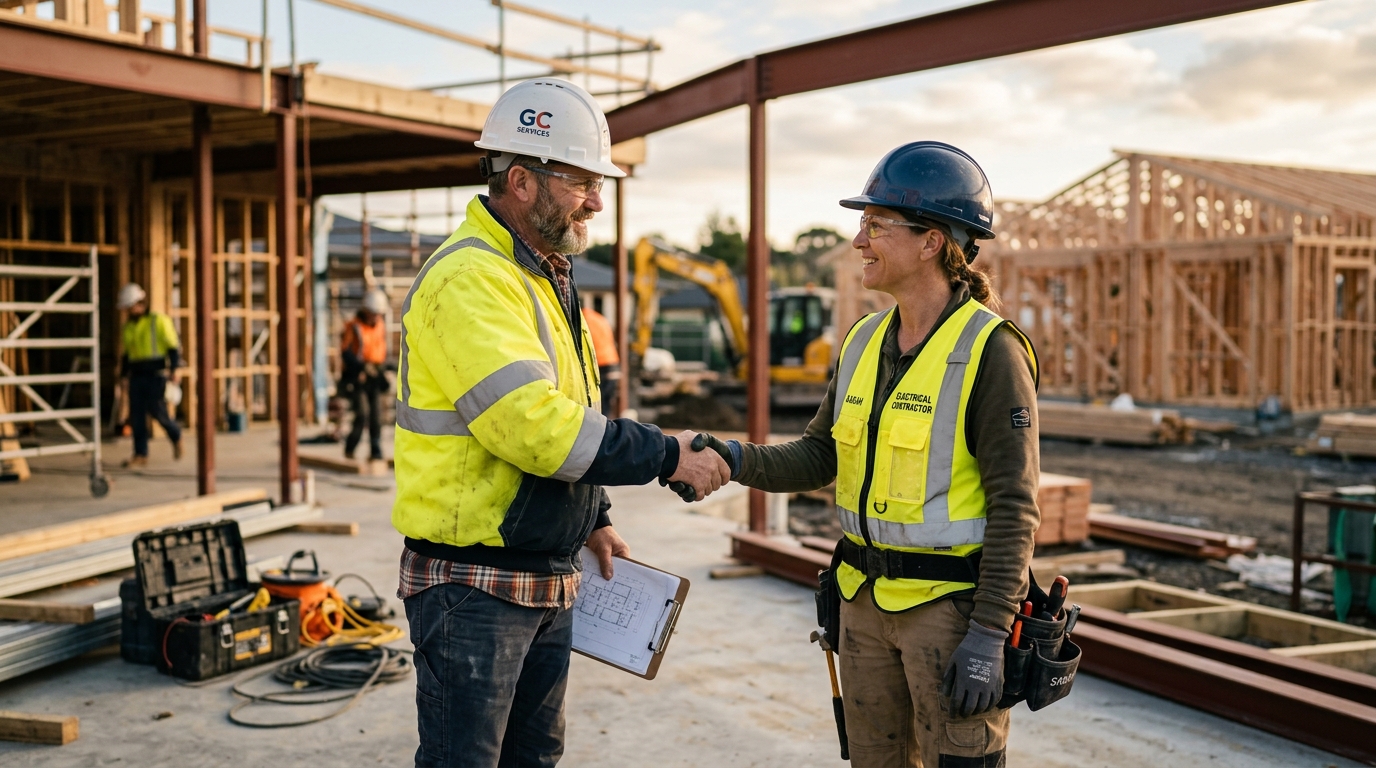
There's a quiet truth in the construction industry that doesn't get talked about enough: most work isn't won on a bid sheet. It's won months earlier, in a handshake on a job site or a phone call that started with "hey, I remember you from that last project."
Why relationships outperform almost everything else
A general contractor juggling a dozen moving pieces doesn't want to vet a new sub mid-project. They want someone they've used before, who showed up on time, did clean work, and didn't cause headaches. That trust takes one bad experience to break and usually years to build — which is exactly why it's so valuable once you have it.
This is different from a lot of industries where the lowest price or flashiest pitch wins. In construction, reliability and familiarity often beat both.
The cost of being a stranger
The hardest part of growing a trade business isn't usually the work itself — it's breaking into a new GC's circle. Most have their go-to people already. Cold calling or cold bidding rarely cracks that. What does work is becoming a known, trusted face before you're needed.
That means showing up to sites even when you're not hired yet, introducing yourself to superintendents, attending the same supplier counters and trade events repeatedly until you're recognized, and following up consistently rather than once.
Why early matters more than perfect
A lot of subs wait until they hear a project is hiring before reaching out. By then, the GC's regular circle already has it covered. The businesses that win consistently tend to introduce themselves while a project is still in early stages — permits filed, site prep starting — before there's even an opening to fill. They're not pitching for a specific job. They're just making sure they're a known quantity by the time one comes up.
The compounding effect
One good relationship with an active GC rarely means one job. It usually means the next project, and the one after that. This is why the smartest operators in the trades think less about individual bids and more about which 10-15 relationships they want to be investing in this year.
In an industry built on trust and repeat business, the businesses that grow fastest aren't always the most skilled — they're the ones who treated every interaction as the start of a relationship, not a transaction.